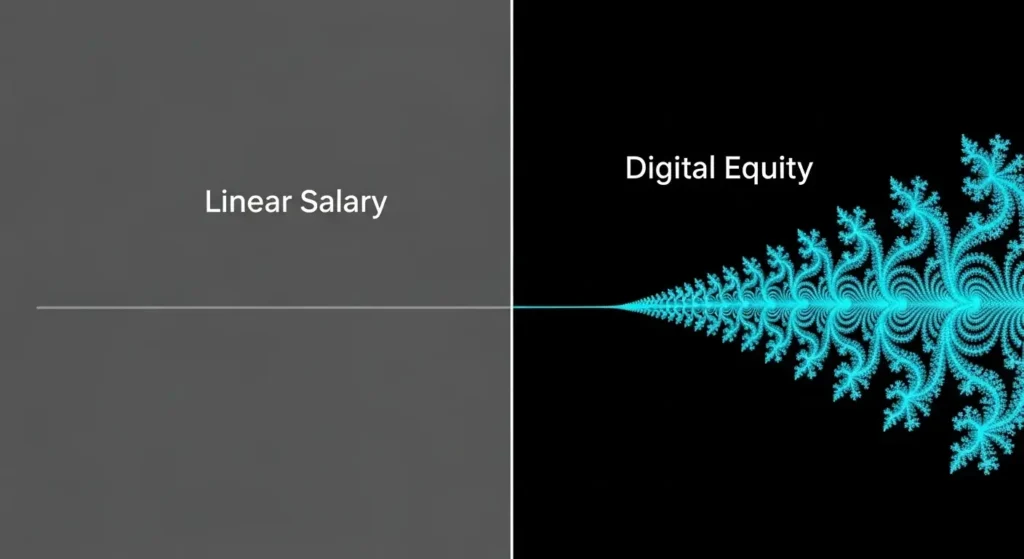

Let’s drop you right into the moment things stopped being “fine.”
You’ve been publishing dev content for a while now — maybe months, maybe years. You write tutorials that genuinely help people. You get kind comments. Your traffic graph ticks slowly upward. You keep hearing that “content is an asset,” that blogs make money while you sleep. So one day, you open a fresh tab, type “how to monetise a developer blog,” and… you feel something shift. It’s the moment the conflict hits. You realise you’ve built something real — but it isn’t earning. And suddenly, the status quo is no longer acceptable.
You try what everyone else tries first: slap on some ads, sprinkle some affiliate links, maybe tweet that you’re “open to sponsorships.” Nothing meaningful happens. The ad payouts are laughable. Nobody clicks the affiliate banners. No sponsors reach out. You refresh dashboards the way you once refreshed build logs — impatiently, hopeful for numbers that never move. What was once your peaceful little corner of the internet has now become a question you can’t ignore: Why is everyone else making money from this stuff except me?
That’s the real conflict — not the lack of money, but the creeping doubt that maybe this whole monetisation thing is either a scam or reserved for people with 100K followers. But here’s the truth most creators never hear: dev blogs can earn — reliably, meaningfully, ethically — but not by following the generic internet playbook. Developer audiences behave differently. Hype gets ignored. Usefulness earns attention. Alignment matters more than sheer volume.
This article is the pivot point in your story — the moment you stop guessing and start designing your monetisation system with intent. Over the next sections, you’ll learn what actually works for developer audiences: when ads might make sense, how to pitch sponsorships that get replies, why tiny products often outperform giant courses, and how to earn without selling your soul or your readers’ attention.
You are not “starting a business.” You are evolving the one you already built — quietly, one post at a time. The conflict has already begun. This is the part where you decide what happens next.
Micro-Products That Sell to Developers — Templates, Tooling, and Tiny Courses

There’s a moment — almost always quiet — when a developer realises something profound: “I don’t need a massive audience to earn. I just need something useful to sell.” It usually clicks after the tenth article you’ve poured your heart into receives polite applause, but no revenue. The conflict isn’t “I don’t have enough readers.” It’s discovering that attention alone doesn’t pay you. But usefulness does. That’s where micro-products change the game — the first monetisation path where a dev blogger with fifty true readers can earn real money without waiting for sponsors, traffic spikes, or magical algorithm blessings.
The magic isn’t in the price tag — it’s in the alignment. Developers don’t buy generic courses; they buy practical shortcuts. For example, a $12 debugging checklist that pinpoints common JavaScript errors. A $19 starter repo with batteries included, such as a ready-made authentication setup for Next.js apps. A $29 Notion workflow that mirrors your real process for launching a new SaaS project, including your template for writing specs or tracking tasks. And unlike ads or affiliates, these aren’t one-off gambles. Each product becomes an asset that compounds in value over time. Make $8 today, $14 tomorrow, $50 next month — not because you hustled harder, but because the internet keeps selling your work while you sleep. That’s the hidden advantage: tiny products feel like “no big deal” to create, but once they exist, they pile up into something that quietly rewires your income.
But let’s talk practicalities — not theory. The process is embarrassingly simple:
You already have a blog post people keep returning to. For example, if it’s about optimising SQL queries, turn your key advice and step-by-step process into a downloadable PDF playbook for readers to reference.
You already have a script or config file that others copy. Package it as a starter repo with one-click setup.
You already have a workflow that others ask you about. Record a 45-minute walkthrough and call it a mini-course.
Sell through Gumroad, LemonSqueezy, or even a private GitHub repo with a Buy button. Link to the product at the bottom of the article, which already teaches the thing for free. Teach publicly, package privately. That’s the whole engine.
This is not one-size-fits-all. Beginners should launch a simple $5–$12 downloadable template just to prove a stranger will pay them. The goal isn’t revenue — it’s psychological proof: “Someone bought something I made.” Growth-stage creators should bundle their most valuable assets into toolkits and add commercial licenses — developers will pay extra to use things at work. Advanced creators? Stop thinking in products — think in libraries. Build a vault. Automate delivery. Charge membership. Let buyers self-serve.
There are trade-offs, of course. You lose the comforting illusion that you’re “just writing for fun.” You now have to ship. Price things. Risk hearing crickets. But the upside is liberation. You are no longer dependent on sponsors choosing you or ad networks throwing pennies your way. You become an engineer-merchant: someone who builds tools and sells them directly to people who need them.
So here’s your nudge — not a hype-speech, just a practical challenge:
Today: Pick your most visited tutorial and ask, “What could someone download from this?”
Tomorrow: Turn it into a checklist, script, or starter repo.
Next 48 hours: Upload it, add one line to the bottom of the post:
Want the downloadable version? Get it here →
Run three experiments. One PDF. One repo. One Notion template. You’re not committing to a business model — you’re collecting conversion data. This is how real dev businesses begin — not with a course launch or a viral post, but with a simple $9 tool that someone buys because it saves them ten minutes.
That first small sale marks your shift from experimentation to meaningful income. But micro-products are just one path. Let’s look at another powerful option: using your blog as a funnel for consulting and direct offers.
Use Your Blog as a Funnel: Consulting, SaaS, and Paid Support Offers

Yes, you’ve built something solid: a blog that teaches, helps, and earns respect. But the money? It’s barely trickling in. You’ve seen the endless advice about ads and affiliates — small pennies dropped on a big floor — and you’re tired of waiting for some algorithmic miracle. What if the real money isn’t in chasing more readers, but in helping the ones you already have? What if your expertise itself is your most valuable product?
This is the quiet power of using your blog as a funnel for consulting, paid support, or SaaS offers. It flips the script from chasing traffic to cultivating trust. Instead of thousands of casual visitors, imagine a handful of clients who pay you for real, meaningful help — sometimes the value of a single consulting client can outweigh 100,000 ad impressions. This isn’t just about income; it’s about turning your knowledge into equity, building authority, and feeling genuinely fulfilled by solving problems rather than selling clicks.
The benefits stack up quickly: consulting engagements deliver high ROI, work even with small audiences, and build career capital you can reinvest in bigger projects or product lines. Practically, start by asking yourself: what’s a realistic paid service you could deliver next week? Maybe it’s a codebase audit, a performance review, or some “office hours” support. Then add one simple, natural call to action inside an existing tutorial — a sentence that offers 1:1 help with a link to a landing section that explains who you help, the outcome clients get, the price, and how to book. Do it once, learn from that first client, then refine your offer into something repeatable and scalable.
Different creators will tailor this path to their own needs. Beginners might start with mentorship calls that feel low-pressure and build confidence. Growth-stage developers can offer implementation help that extends the tutorials they’re already writing. Experts and senior devs have the leverage to charge premium rates for audits or SaaS onboarding. Across all levels, remember to sell outcomes, not hours — “Fix your deployment pipeline” resonates more than “2 hours of consulting.” Embed offers naturally inside your content, follow up by email because many sales happen after initial contact, and productize your repeatable work ASAP to reduce stress and predict workload.
Here’s the truth: you don’t need more traffic or a fancy sales page to start. You just need one clear offer and one reader who needs your help. This approach compounds — the first client brings a testimonial, which lends authority, attracting better clients and potentially leading to product opportunities. Try a small experiment this week: pick your most popular tutorial, add a line at the bottom offering private support, and track if anyone clicks or reaches out. No clicks? You’ve learned something valuable for free. One click? You’ve just bootstrapped your first consulting business.
The Sponsorship Playbook for Niche Dev Audiences

It’s comes a moment when you finally understand that monetisation isn’t about playing a bigger game — it’s about playing a smarter one. Maybe it hits while you’re scrolling through another “top ways to make money with a blog” post, or when you see a site smaller than yours land a paid sponsorship with a developer tool you actually respect. You see their traffic — barely a blip compared to yours — and yet… they’re earning. That’s when the realisation lands like a clean refactor: “Oh. I don’t need more readers. I just need the right ones.”
That’s the quiet power of sponsorships — they break the myth that you must grow endlessly before you can earn. A blog with 1,500 highly aligned developers is often more valuable than a general blog with 50,000 casual visitors. Developer companies don’t want impressions — they want access. They want to appear inside trusted tutorials, in front of people actively solving the exact problems their product helps with. That’s why even beginner-level sponsors routinely pay £100–£500 per placement, and serious ones drop £1k–£5k — not because of traffic volume, but because of audience fit. One good sponsor, treated well, often becomes a recurring source of income. And the moment you land your first deal, something shifts — not just in your bank balance, but in how seriously you see your own work.
But you don’t get there by waiting. You get there by treating sponsorship like a craft. Start with positioning: what corner of the developer world do you own? “Frontend performance,” “Rust for embedded systems,” “self-taught web devs building their first SaaS.” Build a simple media kit — one Notion page or PDF, nothing fancy. Include who you write for, your most-read posts, your newsletter size (even if it’s 147 people), and a couple of pricing tiers. Then send: not 1,000 emails, not cold spam — five thoughtful outreach messages to companies whose tools you already use. The framing is simple: “Your product would sit in front of 2,100 backend devs actively building with PostgreSQL.” That sentence is worth more than any Google Analytics screenshot.
How you implement this depends on where you are in your creator journey. Beginners only need one win: securing one sponsor slot on your most-read post — charge £50–£150, prove the model. Growth-stage creators add structure: one sponsorship per month, maybe bundled with a newsletter mention. Advanced creators build packages: £500, £1,500, £5000 — multi-month retainers with built-in reporting. At every level, never sell “impressions” — sell context. Developers sniff inauthenticity instantly. Make the sponsor look smart, not salesy. Show how their tool naturally fits into the problem your article solves, then report results proactively: clicks, replies, reactions. One sponsor who treats with integrity often becomes a source of recurring income for 12 months.
This model isn’t magic — it has trade-offs. You need to reach out. You must protect your audience from irrelevant pitches. Sponsorships only work if your niche is clear. But the upside is enormous: no products to build, no new funnels to maintain — just aligning businesses with the audience you’ve already earned. One sponsorship deal can exceed six months of AdSense revenue. Two recurring sponsors can make your blog financially meaningful before most creators even hit 5K monthly sessions.
So here’s your challenge — not a thought experiment, an experiment experiment:
Within the next seven days:
1. Pick your most visited article — the one that already gets 30+ clicks a day.
2. Add a simple text block: “Sponsor this post — reach {audience}. Email {you@domain.com}.”
3. Email five relevant companies using this structure:
“I write for {audience}. Your tool is a natural fit because {specific reason}. Would you like to test a sponsored placement within an article already ranking for {keyword}? Pricing starts at £{reasonable amount}.”
4. Track replies. Even one warm response proves the economics.
Because here’s the real truth no one tells beginners: the fastest path to earning from a dev blog is not more traffic — it’s better alignment. You already have what sponsors want: a trusted voice, a specific audience, a format developers genuinely read. The only missing piece is the courage to ask.
And if you run this experiment — even once — you’ll learn more about monetisation in one week than most dev bloggers learn in two years.
The Slow, Compounding Strategy: Email + Evergreen SEO = Predictable Revenue

The world’s noise always finds its way into the creator’s head. You look at other bloggers bragging about viral posts, high-ticket launches, or massive sponsorship deals, and you start to wonder whether you’re missing some secret lever everyone else seems to have. But then something quieter — almost embarrassingly simple — starts to make sense. Old tutorials continue to pull steady traffic. A reader who discovered you six months ago has just subscribed to your newsletter. The blog reveals itself not as a megaphone, but as a slow‑dripping pipeline. And suddenly you see the pattern: the only strategy that consistently compounds for dev creators isn’t flashy at all. It’s email paired with evergreen tutorials — the digital equivalent of planting a tree you intend to sit under for years to come.
This model works because it sidesteps every trap that makes monetisation feel exhausting. You don’t need a big audience, or constant posting, or an extrovert’s energy to shout on social media. You just need a handful of tutorials that remain useful for 12 months or more and a simple email flow that builds trust quietly in the background. Each tutorial becomes a breadcrumb; each subscriber becomes an ally. And the benefits start to layer: predictable compounding traffic, rising conversions across affiliates and products, insulation from algorithm turbulence, and the rare joy of knowing that your work continues working even on the weeks you’re too busy — or too tired — to publish anything new. There’s no adrenaline rush here, no dopamine hit. Just steady, rational, long-term gain — the kind developers secretly prefer.
But let’s get practical — because this isn’t some high-level productivity sermon. It’s engineering. Start with the simplest email system you can tolerate: ConvertKit, Beehiiv, MailerLite, Buttondown — the tool doesn’t matter. What matters is one clean automation: a welcome message, a curated sequence of your best tutorials, and a single monetisation path. Then build the evergreen engine itself: choose three problems developers will still be Googling a year from now — a frustrating bug, a workflow bottleneck, a common architectural misunderstanding — and write tutorials that actually solve them. Add a natural email call-to-action inside each post (“Get one practical dev lesson each week”). Then update your top posts monthly — with minor edits, fresh screenshots, better code samples. This small maintenance loop is what keeps evergreen content ranking, and ranking is what keeps the email list alive. Monetisation flows naturally from there: one affiliate link to a tool you genuinely use, one $9–$29 micro-product, one sponsorship slot later. You’re not building a funnel. You’re building soil.
Different creators will shape this in different ways. Beginners should avoid SEO rabbit holes and instead focus on publishing clear, straightforward tutorials that actually help someone. Their goal is to reach the first 100 subscribers — not traffic, not revenue, but trust. Growth-stage creators can refine their welcome sequence, lean more intentionally into search intent, and sprinkle ethical affiliate recommendations where they naturally fit. Advanced creators can segment their email lists, productize their most valuable content, and build higher-leverage funnels (courses, consulting, SaaS offerings) that automatically feed from evergreen posts. The only trap is chasing keywords. Developers don’t search for keywords; they search for fixes. Empathy and clarity always outrank optimisation.
There are trade-offs, of course. Evergreen SEO is slow. It doesn’t care about your excitement or your impatience. It won’t reward you this week — it will reward the version of you six months from now. But the upside is extraordinary. This engine becomes the backbone of everything else: higher affiliate conversions, smoother product launches, stronger sponsorship pricing, and more resilient traffic. While others panic over algorithm updates, you continue to build equity. Your email list becomes a private distribution channel that no platform can take from you. And this is why so many seasoned developers call email + evergreen content their “retirement account”: unexciting at first, unstoppable later.
So here’s a simple challenge — not dramatic, not overwhelming, just real: pick your highest‑traffic tutorial and add one clean email opt‑in. Tomorrow, update an old post with better code samples. Later this week, send one small email sharing a practical lesson and a tool you genuinely recommend. These micro‑tests take less than an hour each, but each one builds an asset that compounds over time. No complex system required. No grand plan necessary. What matters is the courage to begin the quiet work — the work that pays you back long after you’ve forgotten you did it.
And once you see that first subscriber trickle in — that tiny green shoot emerging from the soil — you’ll know you’ve found a monetisation path built for developer-creators who value depth, honesty, and long-term thinking. The rest of this guide will show you how to layer additional revenue paths on top, but this foundation is essential. This is the one that makes everything else easier.
Three Small Experiments You Can Run This Week to Start Earning

It’s the paradox of early growth: content flows freely, audience expands steadily, yet revenue stays frozen. Not because you lack skill or value. But the leap from “writing things on the internet” to “earning from the internet” feels enormous. The truth is far less dramatic. Monetisation rarely begins with grand strategy or polished products. It begins with experiments — small, reversible tests that show you how your audience behaves when money enters the conversation. Think of these experiments as your first safe steps into a colder pool; you don’t dive, you wade, and in wading, you realise the water’s fine.
The real advantage of this approach is that it cuts through the paralysis developers often feel. No need for new content. No months‑long build. Forget the “big launch energy.” Just three tiny shifts applied to content you’ve already created. Each one gives you something priceless: real data — what readers click, what they ignore, and what they value enough to pay for. And because these experiments live inside teaching‑focused material, you never risk damaging trust — you simply give readers a path to go deeper if they want to. The practical part is simple: take your highest‑traffic post and add a small sponsorship block; update an existing tutorial with a genuine affiliate link and a sentence explaining why you used the tool; package one of your “step‑by‑step” posts into a $9 downloadable product and publish it through Gumroad. None of these tasks takes more than an hour. Each one teaches you something you’ll never learn from thinking alone.
Different readers will find different starting points. Beginners — those still finding their voice — benefit most from the lowest-friction tests, such as adding a single affiliate mention or converting a tutorial into a concise resource. These wins build confidence without overwhelming them. Growth-stage creators, those posting inconsistently but with an archive of solid content, finally have the traffic to justify their first sponsored experiment. A small “Sponsored by ___” section inside a top-performing post often surprises them with results. And the monetisers? They’re ready to run all three experiments simultaneously — because they understand the compounding effect of testing, tracking, and iterating. What elevates results across all groups is honesty: a brief note explaining why you recommend a tool, transparency when trying sponsorships, and pricing that reflects your current stage, not your future ambitions.
Of course, every approach has its trade-offs. Small experiments won’t make you rich overnight — but they will break the psychological barrier that stops most developers from ever monetising. They also create momentum. Once you’ve made your first $9 or landed your first tiny sponsor, your identity shifts: you stop seeing yourself as someone who hopes to monetise someday and start acting like a creator who tests, learns, and adjusts. The danger lies only in overcomplicating things — trying to perfect the product, overthinking the copy, or assuming every experiment must succeed. The point isn’t to win every time. The point is to learn cheaply.
So here’s the push: don’t try to architect the perfect monetisation system. Try one thing in the next 48 hours. Add a sponsorship line. Insert that affiliate link you’ve been meaning to. Package a tiny resource you already have. Each experiment is reversible, low-stress, and deeply informative. Track just one metric per experiment — clicks, conversions, or sales — and treat the results like feedback from a mentor, not a verdict on your worth. You’re not committing to a business model. You’re turning curiosity into motion. And motion is what builds the creators who eventually earn consistently, confidently, and without the frantic energy of trying to “make it.” This is how monetisation becomes a habit rather than a hurdle — not through planning, but through trying.
Affiliate Links That Read Like Real Advice, Not Affiliate Spam

Every developer-creator eventually discovers they’ve been leaving money on the table without even noticing. It usually happens in the middle of a tutorial — you’re showing how you shaved a few seconds off a build, or how you finally tamed that noisy logging output — and you mention, almost as an aside, the tool that saved the day. Readers, thank you. Some bookmark it. And somewhere deep in your analytics, you’ll see a small spike from people Googling the tool’s name because you helped them solve an actual problem. That’s when it clicks: affiliate monetisation isn’t about selling. It’s about documenting your workflow in public and letting the value speak for itself.
This approach works because it aligns beautifully with how developers think. We reward clarity, not hype. We trust people who show their work. When you embed affiliate tools into genuine problem-solving stories — the before-and-after, the failed attempts, the config snippets that finally worked — the recommendation feels like a colleague leaning over your shoulder, not a marketer hunting a commission. And unlike ads or donations, this method scales on usefulness rather than audience size. A blog with 800 monthly readers can outperform a 20,000-follower Twitter account if those readers arrive ready to fix something right now. Each tutorial becomes an evergreen asset, quietly generating income for months or even years, simply because it helps people in a moment of high intent.
The practical setup is surprisingly small. Start with two to four tools you genuinely rely on — the ones you’d recommend even if monetisation didn’t exist. Find the tutorials where they naturally solved a problem and turn those posts into honest walkthroughs. Don’t start with the tool; start with the pain. Show what broke, why it mattered, and how you approached the fix. Then, when the tool appears, it lands with context and credibility. Add a human disclosure (“I use this — affiliate link”), keep the link placed where the reader naturally wants it, and track engagement with a simple UTM-tagged URL. The trade-off is maintenance: screenshots age, features shift, and defaults change. So build a habit of updating your high-traffic tutorials on an annual basis. In return, you get a genuinely sustainable revenue path that doesn’t erode trust, doesn’t rely on volume, and doesn’t require turning into a salesperson.
Different creators will get different mileage from this. If you’re just starting, don’t overthink it — choose one tool you already use daily, write one tutorial where that tool is part of the solution, and trust that clarity beats cleverness. If you’re in the middle stage of inconsistent posting and experimenting with workflows, consider expanding to a small set of tools and bringing in benchmarks or tiny comparisons; developers love seeing the reasoning behind your decisions. And if you’re already monetising, start creating comprehensive workflows — “how I build and ship X in 2026” — where multiple tools appear organically. Pair these posts with email sequences that resurface them and reinforce the value over time. Across all stages, authenticity is the differentiator: real screenshots, real configs, real trade-offs (“this is brilliant until you hit scale”), and an avoidance of “Top 10 Tools for 2026” content that instantly breaks trust.
If the reader were sitting across from you, the coaching would be simple: You’re already using these tools. You’re already solving these problems. Monetisation doesn’t require you to shout louder — only to narrate what you’re already doing. The easiest experiment is to select your next tutorial and weave in one contextual affiliate link. Publish it. Track the clicks for 30 days. Then conduct a small A/B test: one version with a single link, another with two placed where they add genuine value. The point isn’t the earnings — not at first. It’s the insight. Once you see which moments of your teaching actually drive action, the entire monetisation strategy becomes clearer, calmer, and far more aligned with the kind of creator you want to be.
Reader Support & Micropayments: Turning Loyal Fans into Reliable Income

A subtle transformation is unfolding in the developer-creator space — invisible until you’re inside it. It’s the moment you realise your income doesn’t have to depend on traffic spikes, SEO luck, or whether Google woke up in a generous mood that week. Instead, it can grow from something far more stable, more human: the tiny group of readers who genuinely care about your work. Micropayments work because they monetise the relationship, not the reach. When even a handful of loyal readers chip in a few pounds a month, you stop playing the volume game entirely. Suddenly, a niche blog with modest numbers can outperform what 100,000 pageviews would earn through ads — and it happens not through scale, but through resonance.
What makes this approach so powerful for dev creators is how naturally it aligns with the culture of our space. Developers value clarity, honesty, and usefulness. When your work consistently helps someone solve a problem, think more clearly, or build faster, their gratitude doesn’t show up as pageviews — it shows up as a willingness to support the person behind the keyboard. And unlike SEO, which can take months, or sponsorships, which require negotiation, micropayments begin immediately. Set up one simple support tier, add one call-to-action that feels warm and human, and you’ve created a recurring income stream before breakfast. The infrastructure is lightweight: pick one platform instead of scattering yourself across several, offer a small perk that doesn’t add labour, and pair everything with an email list — because email is where these relationships deepen.
Different creators will approach this path in different ways. Beginners often assume they “need more traffic first,” but the opposite is true — micropayments work beautifully even at 200–400 monthly visitors, because what matters is connection, not volume. A simple, humble ask is enough: “If my writing helps you grow, I’d love your support.” Growth-stage creators, with a few evergreen tutorials that consistently attract readers, can layer in a small community space or early-access updates. They’re no longer asking for support — they’re inviting people into a shared momentum. Advanced creators, who already have stable traffic and a deeper audience trust, can expand into tiered offers, cohort sessions, and integrated support systems that complement their products, events, and sponsorships. At every level, the principle is the same: identity beats incentives. People support creators with whom they feel a sense of alignment.
Of course, this model comes with its own challenges. You need to stay visible as a human, not just a byline. Readers won’t support a faceless brand — they support someone whose mission resonates with them. You need to make the ask consistently, not once. The CTA at the end of every article shouldn’t be a sales pitch; it should be a small reminder of the shared journey you and your readers are on. Thanking supporters publicly, sharing progress, welcoming new backers — these small rituals reinforce the sense that being a supporter isn’t a transaction, but belonging to a circle of people who believe in your work.
So here’s the nudge — the gentle but firm push that gets you moving. Forget the giant funnel. Skip the perfect strategy. Don’t chase a massive audience. What you actually need is one weekend and one experiment. Set up a support page. Add one heartfelt CTA to your next article. Ask your email list once. Track the clicks. See if even one person raises their hand. If they do, that single moment will give you more clarity than a month of planning: it means your writing matters enough that someone is willing to pay for it. And once you see that signal, everything changes — because you’re no longer creating alone. You’re building with people who believe in what you’re doing.
Why “Just Add Ads” Fails for Most Dev Blogs

You can almost pinpoint the moment the illusion breaks. You’re sitting at your desk, late at night, sipping lukewarm tea while checking your analytics for the tenth time that week. You’ve added all the right tags, the sidebar is optimised, and somewhere between two YouTube videos and a well-intentioned Reddit thread, you’re hit with that familiar advice: “Just add ads. It’s easy money.” For a split second, it sounds logical — frictionless even. However, when you examine the numbers. Twenty clicks here, maybe fifty there. A few hundred pageviews trickling in. And reality lands with quiet precision: this isn’t a monetisation strategy. It’s a distraction dressed up as a shortcut.
Most developer blogs don’t fail because their creators lack skill; they fail because the monetisation roadmap they follow was never designed for small or mid-tier sites. Ads aren’t the engine — they’re the spoiler added after you’ve built a fast car. In the early stages, obsessing over CPMs or cramming layouts with banners does nothing but slow your site down and siphon energy from what actually matters: writing content with commercial intent. Once you see this clearly, the game stops being about traffic volume and starts being about relevance — the kind of pages that attract companies with real budgets, not automated networks paying you pennies for impressions you worked weeks to earn.
So instead of chasing an illusion, you pivot to the practical path — the one used by developers who actually make money. It starts with a simple audit: What posts already attract people, and what tool to choose? Do any of your articles land on problem-solving searches that businesses care about — hosting platforms, API tools, cloud services, monitoring solutions? Once you find even a handful, you suddenly have something ad networks can’t give you: leverage. That’s when you skip programmatic networks entirely and go straight to direct deals. You build a clean media kit — nothing fancy, just numbers, audience clarity, and the topics you write about. Then you reach out like a human, not a broadcaster. The irony is beautiful: one smart, relevant sponsor placement often outperforms thousands of automated impressions. Developers hate clutter, but they respect a single, tasteful native ad that points them to a tool that actually helps them ship faster.
Of course, this perspective looks different depending on where you’re standing in your creator journey. Beginners shouldn’t even touch ads; they should focus on building their foundation of 10–20 genuinely helpful articles. Growth-stage creators should conduct a traffic audit and start exploring their first sponsor conversations — nothing heavy, just dipping a toe into partnerships with dev-tool companies aligned with their content. Monetisers, on the other hand, should optimise the system by focusing on long-term sponsorships, newsletter placements, better RPM tracking, and an understanding of the lifetime value of each advertiser. Ads aren’t for everyone — they’re for the stage you’re in. Matching the strategy to the season is half the wisdom.
And if you’re wondering how to start without breaking anything, the safest way is to experiment small. One native ad. Thirty days. No clutter. No blinking scripts. Watch RPM, bounce rate, and reader sentiment. Swap it out next month and compare the results. It’s calm, scientific, and strangely liberating — a reminder that you’re building a business, not decorating a webpage. Ads aren’t the prize; they’re a tool. And the more you treat them like an optional optimisation layer instead of a miracle solution, the faster your blog stops looking like a hobby and starts acting like a real asset.
To wrap it all up…
You started this journey feeling stuck — good content, kind readers, but zero reliable income. Haunted by the question, Why am I building all this if it’s not working for me? Now there’s something stronger than hope: a framework, a set of proven strategies to monetise a dev blog without betraying what makes it yours.
You face a real choice. You can keep publishing in the same way — waiting, hoping for a break, dabbling in ad banners and affiliate links without a plan. Or you can take control: implement the sponsorship playbook, test micro-products, weave affiliate links into real tutorials, and lean on your most loyal readers — all while maintaining your integrity and your voice.
If you choose to act, the consequence is a blog that doesn’t just survive — it supports you. Not just as a side hustle, but as a meaningful part of your creator identity. You can start small, run three experiments this week, and build a system that compounds over time. And if you’re ready to level up further — whether with creator gear to brand your work or tools to build your audience — subscribe to our newsletter for more actionable guides, or browse our shop to get creator gear that reflects your builder mindset. Your blog, your way — let’s make it work.